My new framework for leadership and change

Updated: Oct 12

Hello to all of my new subscribers and all of you who have been interested in my work. In this newsletter I am going to introduce you to my new framework and share with you why it is so powerful for seeding and supporting new change and leadership.
Please note, if you are interested in this new iteration of my work please take a look at my new website which will show you more.
Where current leadership training fails
For decades there has been an insidious theme in leadership training focusing on the leader as a solitary 'hero' leading the way forward. I have spoken much about this in previous posts linking it to the impact of Joseph Campbell within the cultural canon. I have very consciously used the word insidious as this narrative, seeped into our culture and informed it through the great 'Hollywood machine'. There is a link here that tells you all about the 7 page memo that Chris Vogler - a consultant for Disney - created based on Campbells mono-myth. This became a very sought after document that flowed into story structure manuals, game design, advertising, branding, and eventually leadership development programmes and personal brand coaching. Each step stripped away more of the mythic material and left the skeleton: one protagonist, a call, an ordeal, a victory, a return with the prize. It is interesting to note that George Lucas had already been a strong follower of Campbell and credits him as being a shaping influence on Star Wars.
The issue with this narrative has always been in it's limitation of the leader. There is little space for doubt vulnerability, loss or an acknowledgement of the need for the help and wisdom of others. The narrative also structures the 'leader/hero' as a winner or a loser, there is complexity or expression of liminality within it. Often the stories are filled with battles, with themes of conquer and destruction. These themes have become apparent in so much of the leadership dialogue in the form of metaphors. Indeed a large percentage of business language is built through the metaphors of conquest, sport and struggle.
It is here that my work is very conciously challenging this dominant narrative.
Where Ecology and Mythology help in Leadership and Change
If you go and take a look at my website - (please do as I love it and have worked hard on it with the wonderful Rebecca Jones ) - you will notice that all of the metaphors I use are to do with the natural environment - there is thriving and nourishing and seeding and growing. The reason I did this is because metaphors shape thought and I truly want to shape the thoughts of the people who I work with and also you - reading this - I want to shape your thoughts. I want to offer a beautiful, entangled, reciprocal way of being in relationship with one another and with the more-than-human-world and my two main teachers for doing this are Mythology and Ecology.
Organisations and communities do not follow linear narratives - nor does leadership
I know that within many of the ancient myths, there are alternatives provided to Campbells offering of leadership - take a look at 'The Carrier Bag Theory of Fiction by Ursula K Le Guin - which offer that - before the preeiminance of sticks, swords and the Hero's killing tools, our ancestors greatest invention was the
container: the basket of wild oats, the medicine bundle, the net made of your own hair, the home, the shrine, the place that contains whatever is sacred. The recipient, the holder, the story. The bag of stars.
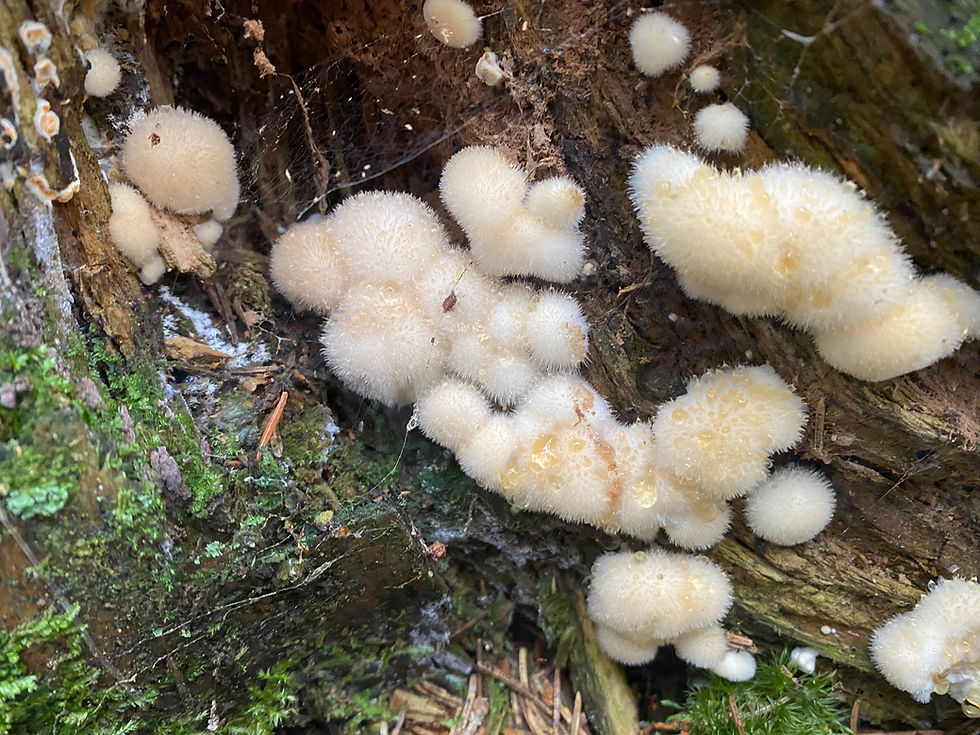
There are also a range of different story structures from around the world that are more complex and interlaced than the linear narrative that Campbell offers. One of these is the East Asian four-part structure kishōtenketsu that is not built around conflict and can be summarised as: introduction, development, twist/reversal and resolution. You have the stacking of stories within stories that exist in Russian Wonder Tales as well as the Arabian Nights tales. For me these structures better reflect what it is to be human - how one might think that a problem has been solved, only to find that the solution has caused another. Very often within organisations, the myths that exist and that form the culture can act as nourishment for new futures and ways of thriving or they can limit growth and cause an organisation to atrophy and diminish. The story-soil that the myths come from needs to be dug over on a regular basis in order to see all of the different stories and beliefs that lie entangled within it. These narratives are latticed and enmeshed - much like mycelium and this is where I connect my work with ecology.
It has never been the survival of the fittest
According to the Darwin Correspondence Project at Cambridge, the phrase above was coined by the philosopher Herbert Spencer after reading Origin of Species. In 1864, Spencer used the phrase to draw parallels between economic theories and biological ones in his Principles of Biology. Darwin did go on to use it but for him 'fit' meant fitting, the way a key fits a lock. He intended it to mean "better designed for an immediate, local environment." Nothing about strength, dominance or winning. Britannica adds that Darwin regarded evolution as survival of the fitter rather than the fittest, because the struggle for existence is relative and not absolute.
So think back to all of that stuff we were taught in school about the biggest tree getting all the light, or that there was an alpha wolf etc. Essentially they are not completely true. The large trees actually create the 'understory' - (I love that it is called that ) - for other growth to take place nearer the ground, providing shade and nutrients. And when wild wolves, were studied in a 1999 paper in the Canadian Journal of Zoology, it was concluded that the typical wolf pack is best described as a family unit, and that the alpha terminology was misleading. Younger wolves don't overthrow the leader; as they grow up, they leave their parents' pack, pair off with other dispersed wolves, have pups, and form packs of their own. He proposed simply calling them the breeding male and breeding female.
The scientist who gave us "alpha" spent decades asking us to stop using it. Yet the myth has been used to justify harsh, dominance-based dog training and to romanticise aggressive "alpha" leadership in people.
Within ecology there is a huge entanglement and reciprocity
I could go on about how the calcium in our bones is far older than us, older than the Earth itself, and it was made inside stars. When the universe began, it held almost nothing but hydrogen and helium. Heavier elements like calcium had to be built. Large stars do this in their cores, fusing lighter atoms into heavier ones over millions of years. Calcium forms near the end of a massive star's life, and when that star collapses and blows apart as a supernova, the calcium is scattered out into space. It drifts through clouds of gas and dust, and about 4.6 billion years ago some of those clouds gathered to form our Sun and the Earth. The calcium settled into rock, washed into soil and water, was drawn up by plants, passed into animals and food, and finally into us, where it became the hard mineral of our skeleton.
Or I could tell you that our bones are surrounded by something called cambium which is the inner layer of the periosteum, the thin skin that wraps around our bones. It holds cells that build new bone, so our bones can grow thicker through childhood and repair themselves when they break. It is how our fractures heal - it is also present in trees too, doing essentially similar work - in a tree, the cambium is a thin living layer just under the bark. Its cells keep dividing, laying down new wood on the inside and new bark tissue on the outside. That is how a tree grows wider each year, and how it makes its rings. But if you want to know more about our linking, latticing and entangling with ecology, read Returning Home To Our Bodies which is one of the most incredible books I have read for a very long time.
Why the intersection of ecology, mythology and leadership is essential right now
So, let me explain to you why I am working this way - put simply, I want to change the world. I believe that using language that stitches people back into the natural environment and into the rich mythological past is a way of preventing more damage to the natural environment and to each other.
I want to share that we come from a rich shared history - a mythological history where the landscape was animate - and we inhabit a world where the landscape can teach us. I want to use metaphors and language that constantly reminds us of this. Word by word, seed by seed, stitch by stitch I want us to embed ourself into the knowledge of reciprocity and the knowledge of how utterly entangled we are with everything on this wild, wonderful and now worn-out planet.
I no longer have hope that we can stop what is to come - however I do have hope that we can prepare for it by tending to the soil of the stories that need to be created. Stories of coming together and sharing, of building community gardens, of tending to the wild and indigenous plants and flowers, of creating human mycorrhizal networks than flourish horizontally - reaching and nourishing and holding each other.
So, this intersection of ecology, mythology and leadership is essential for the thriving of all life on this planet - I truly believe that. I want us all to be really intentional about the language and metaphors we use so that we are constantly stitched back into that which we come from - this earth.
I would love to hear your thoughts on this - truly.
In hopeful entanglement,
Katrice